
You need people to do something. Maybe you need someone to take a job, buy what you sell, or get behind a new idea at work. So you explain why it matters, and very often they still say no.
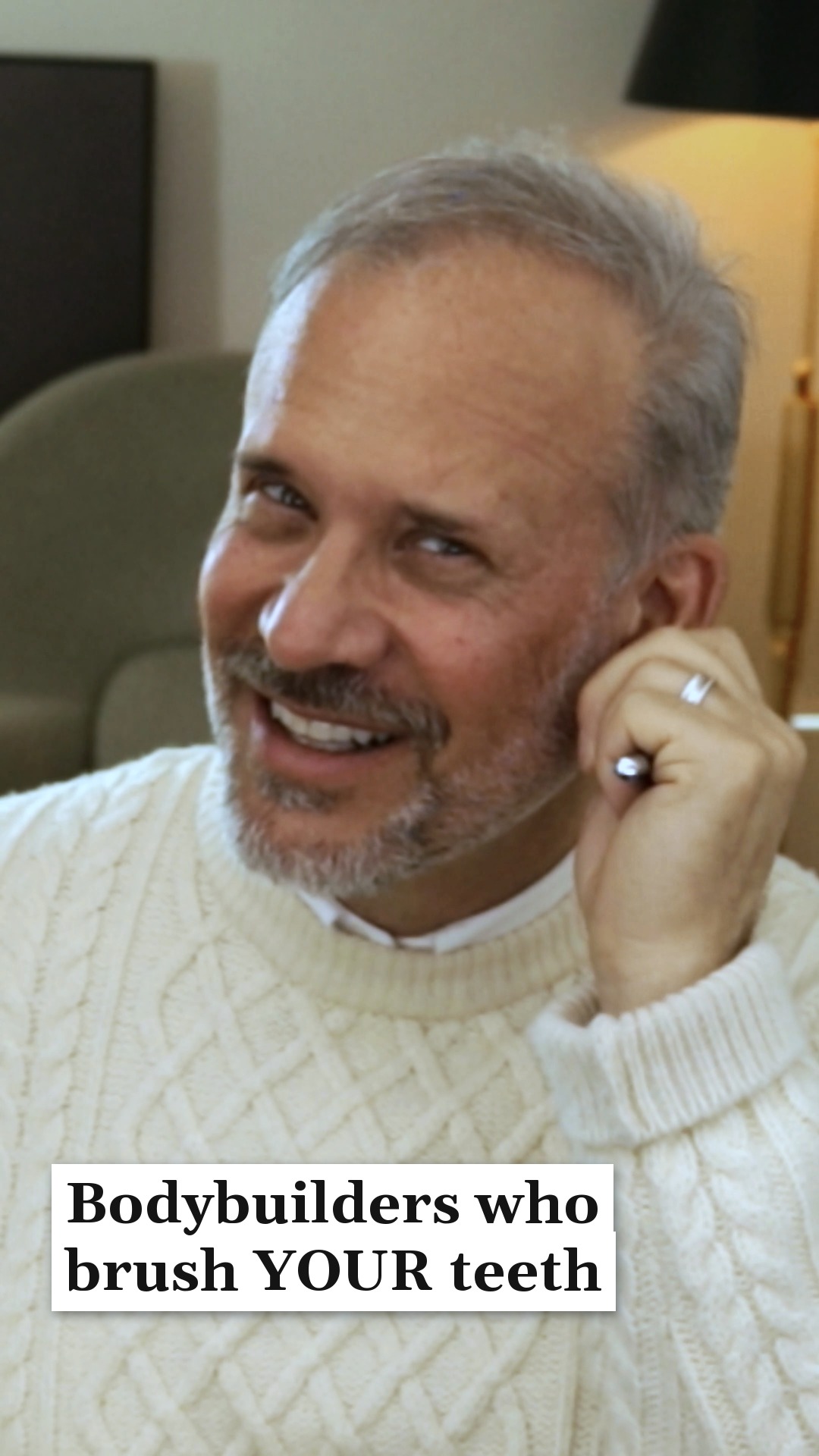
There's a better way to ask, and I've got really fascinating proof that it works. In the video at the top of this post, I tell you how a man who runs a chain of seniors' care homes convinced bodybuilders to come and work for him. It's one of the stories from the travelogue section of my new book (chapter 16).
Japan has the highest share of older people of any country on earth. In 2023, 29.1% of Japanese citizens were 65 or older. The government says that by 2040 the country will need 2.72 million caregivers, and it expects to be about 570,000 short.
The work is hard. Caregivers lift people out of bed and out of wheelchairs, feed them, put in their eye drops, and, yes, brush their teeth. The pay is among the lowest of any job in the country. More than 70% of caregivers are women, and most are over 40, because in Japan caregiving is seen as work for women. Young men won't go near it. It's not something you'd brag about to your friends at a bar.
Yusuke Niwa runs a care company called Visionary. For its first ten years he ran it the same way everyone else did, and he had the same problem. He needed strong young orderlies to do the heavy lifting, and he got two or three applications a year.
So he changed what the job was about.
The usual way to recruit caregivers is to talk about how meaningful the work is. That speaks to the value of Compassion and the value of Service to Others, which are the reasons you're supposed to want to work in this industry. Those reasons work on people who hold those values. They didn't work on the people Niwa needed.
Niwa spent most of his free time at the gym, and he knew a lot of the young men who could do this work were at the gym too. So in 2018 he launched a program called Macho Caregivers, aimed at bodybuilders. You get up to two hours of paid gym time a day. The company helps pay for your protein shakes. And you get a spot on the company bodybuilding team, 7SEAS, which competes nationally. The rest of your shift, you work in the care homes.
The work itself stayed exactly the same. A caregiver at Visionary still brushes teeth and helps people eat. What Niwa changed was the set of values the job gives you more of. He stopped selling it on Compassion and Service to Others, and started selling it on the value of Ambition, the value of Personal Growth, and the value of Health & Well-Being.
Before Macho Caregivers, he got two or three applications a year. After launching the program, in the first year alone, he got more than 150. A quarter of his workforce is now under 24, and the company runs 29 care facilities across Japan.
Make it about What Matters Most to them.
Most of us explain why something matters to us, because that's the reason we know best. Niwa did the opposite. He found out what mattered most to the people he needed, and he rethought the job to give them more of it.
So how do you figure out what matters most to someone else?
That's what my new book is for. The Values Map is full of tools and techniques that help you identify your own values, and the values of the people around you.
You start with yourself. While you're learning about your own values and seeing how they work on you, you'll also see how to use the same tools to be a better leader, a better marketer, and a better mother, father, brother, sister, or friend.
Everything gets easier when you know what matters most.
The Values Map is available for pre-order now, and I would be very grateful if you pre-ordered a copy. ❤️