.webp)

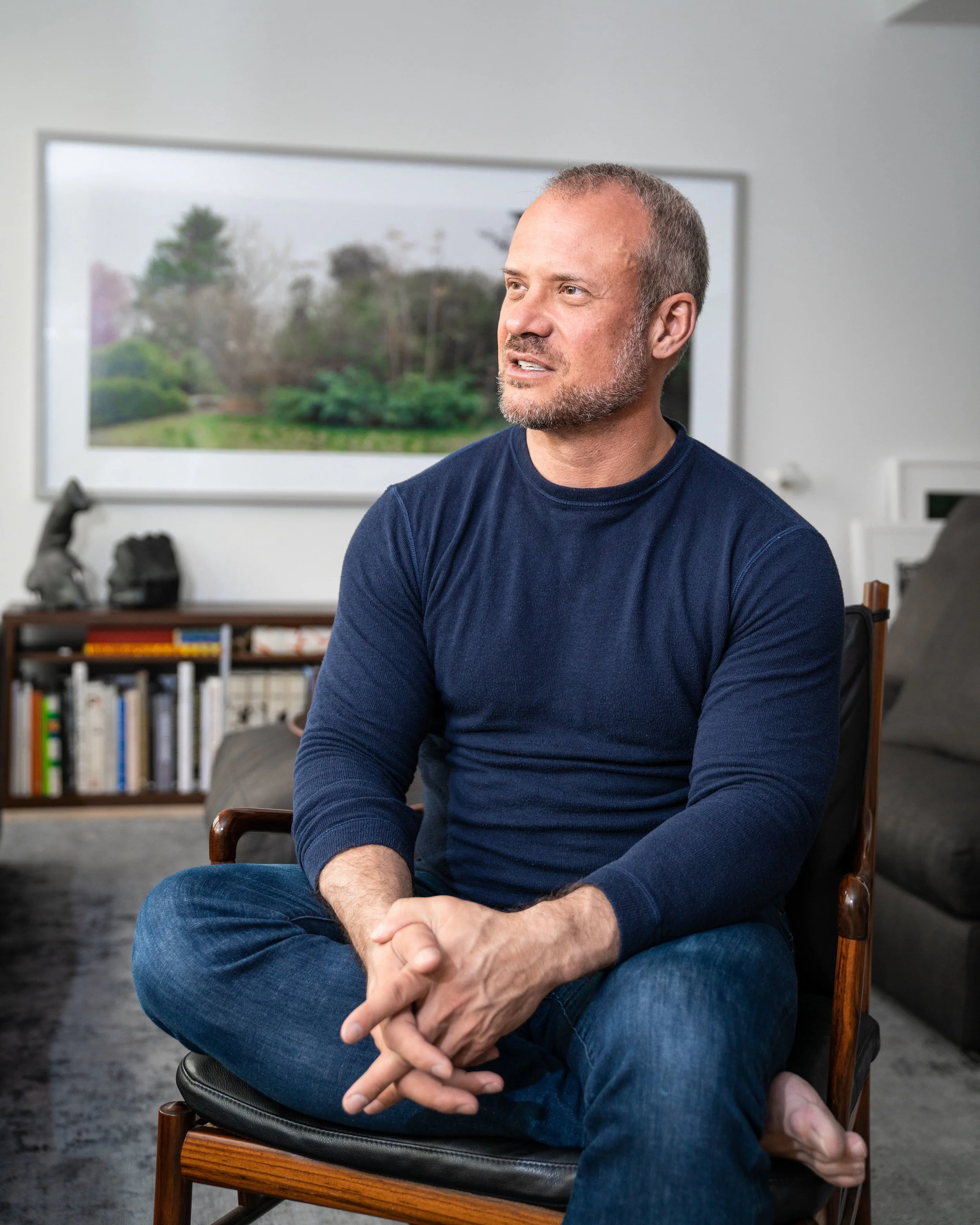
I'm supposed to be writing a book right now.
I'm sitting at my desk in Vancouver, a third cup of coffee going cold beside me, staring at a manuscript that needs my attention. But I've got my speaking calendar pulled up on a second screen because I was looking for a specific date I needed for a chapter, and then I just started scrolling. Sometimes I get lost in the memories of my travel itinerary, the way some people get lost in old photo albums. Damn, that makes me sound like an old man.
Here are a few of last year's stops. Some of them I hit more than once, and a few three times or more. Houston. Savannah. Montreal. Calgary. Chicago. Whitehorse. Ottawa. Fredericton. Cannes. Minneapolis. Washington, D.C., Cleveland. Boston. Sacramento. Palm Springs. Huntsville. Toronto. Lancaster. Saskatoon. Nanaimo. New York City.
That's a lot of airport coffee. Roughly forty keynotes in more than twenty cities across multiple countries. I hadn’t counted until just now, but I’m glad I did. Makes me feel like I’ve accomplished something.
What strikes me most is that every one of these audiences thought they were hiring me to talk about something specific. Leadership. Sales. AI. Employee engagement. Creativity. But they were all really asking the exact same question, just using different words: what matters most to the people around us, and how do we connect with them on that level?
A big chunk of the year was about leadership, and we covered everything but the kitchen sink. The Yukon government brought me up to Whitehorse, where I worked with the Department of Health and Social Services on how values can transform services in the North. That same conversation, in different forms, happened with college and university deans and VPs at the Higher Learning Commission in Chicago, with sign manufacturers, Indigenous tourism experts, meeting planners, and people who run federal government departments in Canada. I spoke to union leaders, insurance and benefits professionals, the heads of the largest construction companies in the USA, public service human resources pros, and lawyers who work in some of the largest companies in the land.
And you could hear a pin drop in every single one of those rooms at about the same moment when I explained how the demographics they've been relying on to understand people are a blunt instrument; that knowing someone's age and income tells you almost nothing about what actually motivates them.
The sales keynotes were wide-ranging, too. In Huntsville, Ontario, CIBC wanted to understand what motivates the next generation of wealth, the inheritors of all that boomer money, and I can tell you the answer has almost nothing to do with more money. Personal Responsibility. Experiences. Community. Those are the values that showed up. That disconnect between what organizations assume people want and what they actually want came up again and again, whether I was talking to franchise companies, manufacturing associations, banks, destination management organizations, home builders, or professional services firms. Here’s the big takeaway: all sales, regardless of category, come down to the same thing. Just show people how your product or service will give them more of what matters most to them. That’s all you need to do.
It was a big year for AI keynotes, too. No surprise there. From helping not-for-profit organizations understand the mindset of their workforce at an event sponsored by GoFundMe to helping everyone from grocery stores to unions understand the same thing for their teams. Everyone is looking for ways to help humanize AI as it rocks and rolls across pretty much every sector and organization in the world. The thing I kept telling all of them is that the adoption of AI isn't a technology problem. It's a people problem. Understand your people and what matters most to them, and you can help them embrace AI.
The engagement and culture work covered the most ground. PCMA kicked things off in Houston, where we talked about designing event experiences for attendees of all ages, which is no small feat: how do you make the person who's attended forty conferences care as much as the person attending their first? In Calgary, I stood in front of the Alberta Cattle Feeders' Association and the National Cattle Feeders' Association and talked about capturing hearts, minds, and trust across the province. Similar conversations happened with BC Food & Beverage in Vancouver, Destinations International in Sacramento, Coast Hotels in Nanaimo, BC, and the Saskatchewan Real Estate Association in Saskatoon, Saskatchewan. Different industries, different cities, same underlying question about what actually makes people feel connected to the place they work, or the community they are part of.
And then there was Amazon, which brought me to Cannes, France, to speak at the Golden Lions Festival of Creativity about using a values-driven approach to marketing, rather than one based on generational stereotypes about who people are and how to get them to buy. I sat at a café afterward, looking at the ocean, eating something exquisitely fresh and French, thinking about the cattle ranchers in Calgary. Same research. Same fundamental insight about what makes humans tick. One audience is feeding the world's beef supply, and the other is one of the biggest companies on the planet, and they both needed the same thing from me: to understand what matters most.
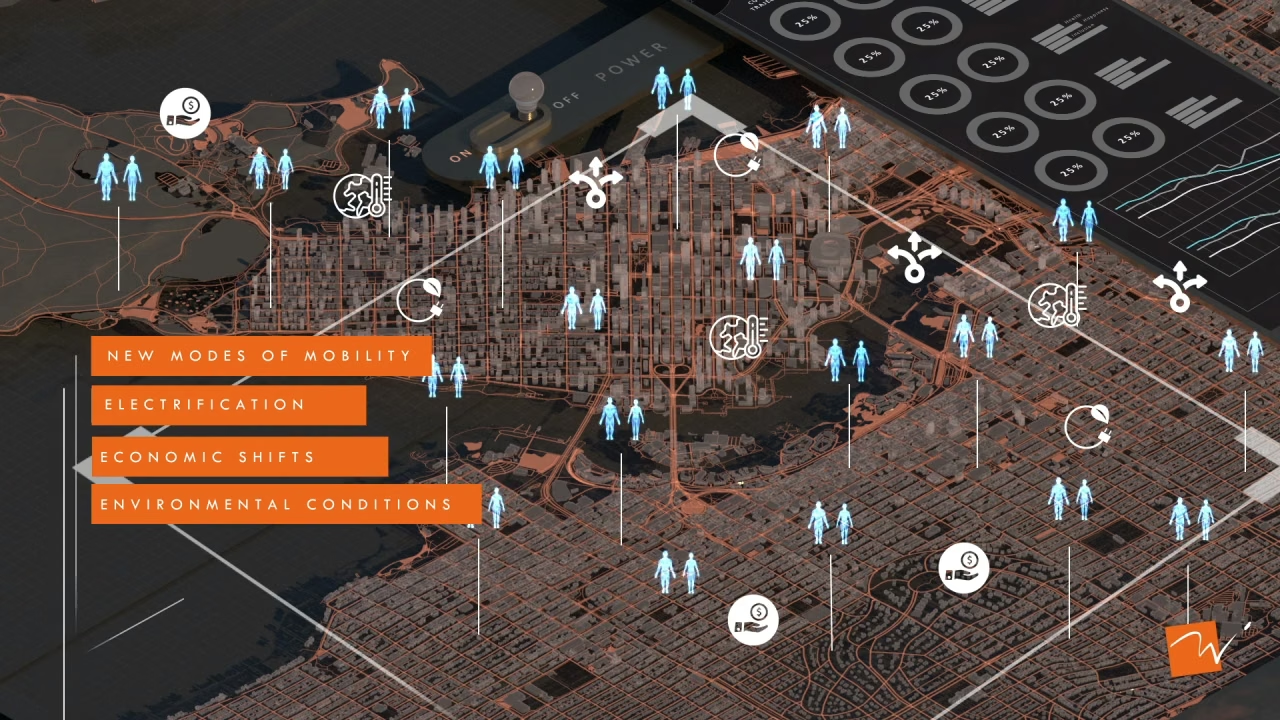
Even in my hometown of Vancouver, I spoke with civic leaders about what matters most to the people who live here now and to those who will move here next to help them plan the future.
It seems to me that the work we do might be the only research in the world that gets used by the beef industry, lawyers, home builders, unions, HR professionals, and tourism experts all in the same year.
Every one of these audiences thinks they're asking about AI, or leadership, or sales, or engagement, or creativity. But they're really asking one question: What matters most to people? What do they value?
That's the work my research firm does, The Valuegraphics Research Company. And that’s what I end up talking about all around the world. When you know what matters most to a group of people, or to yourself, for that matter, you know what's driving them. You know who they are, what gets them up in the morning, why they show up, what will make them excited and engaged and motivated and inspired. I know that sounds like a big claim, but we’ve got a database teeming with a billion data points that back it up.
I think about the thousands of people I reached on all those stages last year. Thousands more have read my books. The people who see what we share online. And the folks who subscribe to our very sporadic bulletins and letters (which, by the way, you should join if you haven't already). It all adds up. Maybe we're changing minds one person at a time, one room at a time. But we're changing them.
The manuscript is still sitting there. I should get back to it. But moments like this, where I sit back and look at where the work has taken me, from Houston to Cannes to Whitehorse to New York City, from cattle ranchers to tech companies to public sector HR to the tourism industry. It makes it all worthwhile.
Thanks for being part of all this. I mean that.
Now, if you'll excuse me, I have a book to write.
Remember: if you know what people value, you can change what happens next.
Download free tools, data, and reports at www.davidallisoninc.com/resources
Want to know What Matters Most to the people you need to inspire?
Download free guides and resources.
Find out why people call David “The Values Guy.”
Search the blog library for ways to put values to work for you.