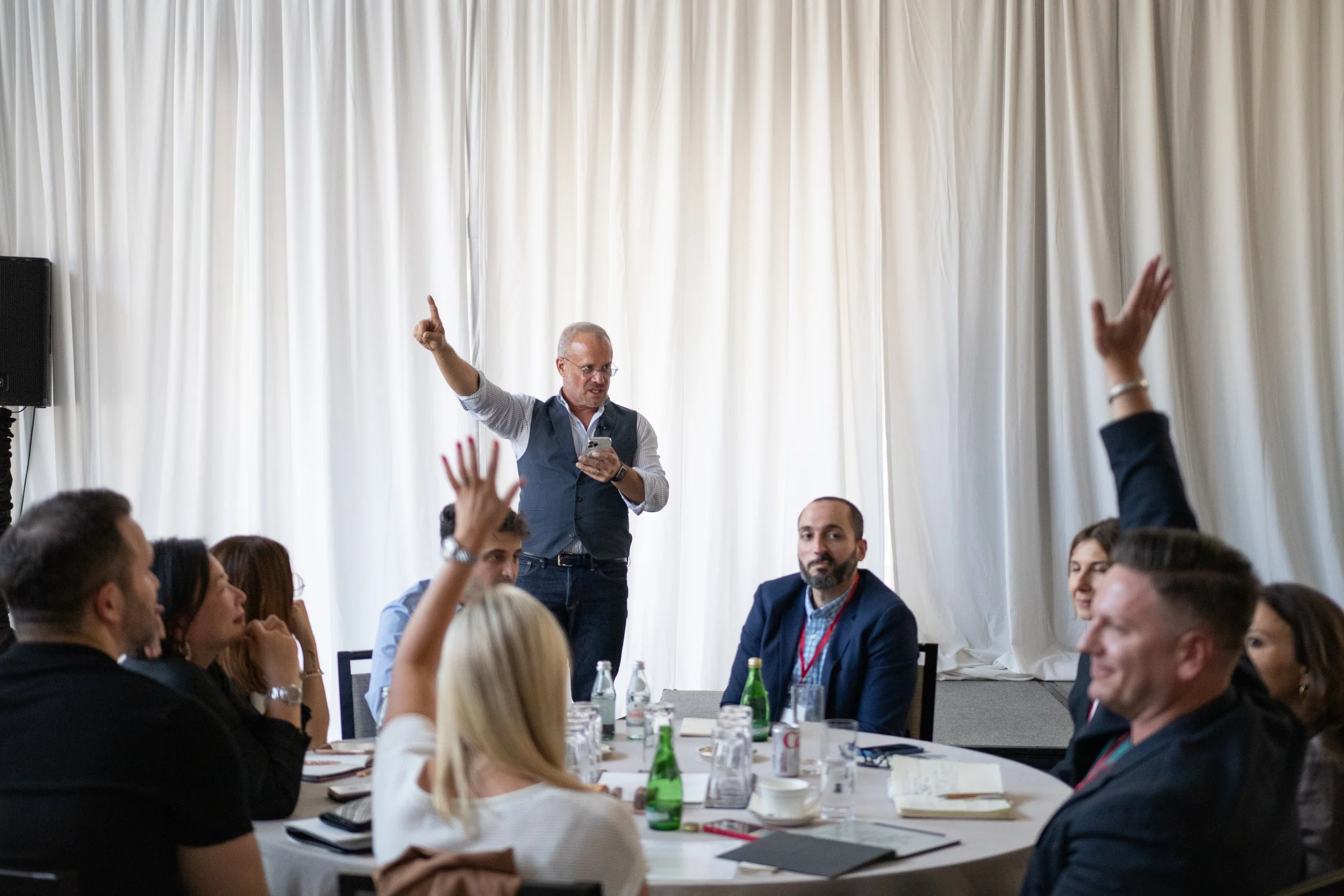

This video shows how every one of my keynotes begins. The video is at the top of this post, and the transcript (more or less) is below, slightly revised to make more sense than what I said out loud! :)
Every keynote I give starts with something we call the Values Compass quiz. It's a short, five-question diagnostic that everyone in the room does at the same time, and it shows people which values team they play for.
There are four teams, and they are based on a million surveys we've done around the world. The quiz is a very simple way to use a very statistically accurate set of data. In other words, this is not a horoscope. It's not one of those "Which Kardashian are you?" quizzes. This is science.
The first team is Autonomy. These people come up with idea after idea and find new ways to solve problems. But they will only do things on their own terms, and they hate being micromanaged. They're like cats, so we call them Autonomy cats.
The second team is Connection. These are the people who need people. They keep a team from falling apart under pressure, they're always happy to see everybody, and they make everybody feel like they belong. They're like Labrador retrievers, so we call them Connection dogs.
The third team is Resolute. They're all about principles, ethics, morals, rules and regulations, and they keep the rest of us out of jail. They make sure everything gets done exactly the way it's supposed to get done. They're the wise old owls of the organization: Resolute owls.
The fourth team is Stability. They keep the ship from sinking and the trains running on time, because they know there's a time for everything and it should happen in a certain order. They're like big bears: Stability bears.
An organization needs all four kinds of people to run properly. So in the keynote we look at the gifts each kind of person brings and how those gifts help you meet your objectives. We look at what each of them needs to be at their best at work. And then we do something really important: we teach everybody how to speak the language of the other teams. If you're an owl trying to talk to a bear, you need to speak bear, because bears don't understand owl.
It might seem silly to talk about it this way, but it's incredibly powerful once you see how it works. It's fun, it's simple, and in the times we live in, that simplicity is very valuable.
How to speak each team's language
Here's the short version of what people learn during my keynote. Whoever you're trying to engage, motivate or inspire, stop speaking to them in the language of your values and start speaking to them in the language of theirs. Make what you're asking about What Matters Most to them, and they'll lean in.
To get an Autonomy cat's attention, show them the goal, then give them control. Hand them a problem, not a procedure, and let them work out how to solve it.
To get a Connection dog's attention, make it about the people. Tell them who they'll be working with, and keep the team together.
To get a Resolute owl's attention, lay out the rules of engagement. Explain the reasons behind a decision, and make sure the process is fair and the same for everyone.
To get a Stability bear's attention, show them the plan before you ask them to move. Give them the steps, the timing and the safety net, and then they'll leap.
That's a super short, super fast, super tiny overview, but if you want more, the Values Compass quiz comes from my new book, The Values Map. There are all kinds of other things in there that will help you understand your values, the values of the people around you, and how to put it all to work.
If this one hit home, you'll also find this post useful: Tired of networking small talk? Ask this one question instead.
Everything gets easier when you know what matters most.
My new book walks you through all kinds of ways to identify (and use) your values. It's called The Values Map. Get your copy today; I’ll be very grateful if you do. ❤️